
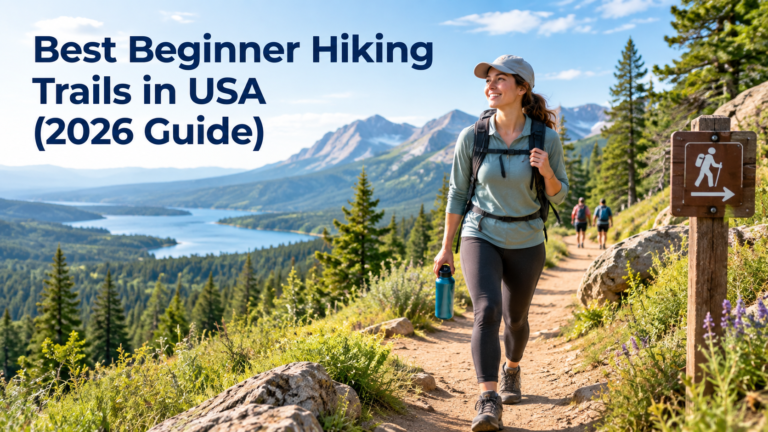
My first real hike was a disaster. Wrong shoes. No water. A trail with too much climbing. I didn’t check first. I turned around after a mile. Sat on a rock. Questioned every choice that got me there.
Nobody tells you this part. The path is far more important than the equipment. Choose something that is too difficult and you’ll grow to loathe hiking before ever having given it a fair try. That is what occurred for me.
Below, I have compiled the best beginner trails to hike in the USA. Actual trails that deserve to be called easy and not simply have the word slapped upon them. Short. Well marked. Still pretty enough that you’ll want to try a harder one after.
What Actually Makes a Trail Easy
Not every “easy” trail is easy. Some parks stamp that word on anything under five miles, climb or no climb, which honestly feels like cheating. A true beginner trail keeps the distance short. Keep the climb low. The path stays obvious, so you’re not stopping to check a map every few minutes.
Parking matters more than people think, too. The lack of restroom facilities and having to walk far just to get to the trailhead makes a beautiful trail not so enjoyable after all.
Lower Yosemite Fall Trail, California
One mile. Flat. Mostly paved. It takes about half an hour if you’re not stopping for photos every few steps. You will stop, though. The waterfall drops right in front of you the whole way, and good luck walking past that without your phone out.
This is one of the most popular beginner trails in the whole park system. It earns that spot. No real climbing at all. Walk toward the falls, take your pictures, and walk back.
Dream Lake Trail, Colorado
The Dream Lake hike in the Rocky Mountains is 2.1 miles long. The ascent is slightly greater than Yosemite Falls but nothing difficult. You’ll pass Nymph Lake first, then reach Dream Lake, sitting below Hallett Peak, looking exactly like the postcard version of a mountain lake.
Altitude’s the real challenge here, not the trail.The initial stage will have an elevation above 9,000 feet. Give yourself a couple of days if you’re starting at sea level or close to it. Walk slowly. Drink extra water.
Ledges Trail, Ohio
Cuyahoga Valley National Park is not getting the same spotlight as Yosemite or Zion. Under-rated, no doubt about it. But the Ledges Trail still deserves some mention. A little over two miles long and takes you around sandstone ledges and forests, which Ohio does not normally get credit for.
Nice choice when you want the beauty but don’t need elevation, crowded trails, or permits.
Horseshoe Bend Trail, Arizona
Short. About 1.5 miles round trip. The payoff is huge, though. You end up standing above a dramatic bend in the Colorado River. One of those views that looks fake in photos, until you’re actually standing there seeing it.
Heads up, though. Barely any shade out here. Arizona heat does not mess around, ever. Morning or early afternoon is much better than mid-day in the summertime, and I mean much better.
Zion Canyon Overlook Trail, Utah
About one mile round trip. A little rock scrambling near the start trips up some first-timers. Nothing technical, just a short section where you use your hands a bit. After that it flattens out and gives you one of the better views in Zion for barely any effort.
Zion’s famous trails, Angels Landing especially, are not beginner routes. No matter what your overly confident friend tells you. This one’s the real beginner option. It still shows you real Zion views.
Discovery Park Loop Trail, Washington
Seattle’s Discovery Park features a loop that is around 2.8 miles long. Forest, meadow, and cliffs above Puget Sound.Well kept, well marked, and close enough to the city you don’t need a whole trip planned around it.
A Few Hiking Tips for Beginners
Start earlier than you think you need to. Trails fill up fast. So do parking lots. Weather can turn quick in the afternoon, especially near mountains.Bring more water than feels necessary. People underestimate this constantly, then end up cutting a hike short because they ran dry an hour in.
Check trail conditions before you go. Don’t just trust old blog posts, this one included. Conditions shift with the seasons. Trails close sometimes without much warning. The National Park Service trail pages stay current in a way most articles just can’t.
Tell someone your plan. Where you’re going, when you’ll be back. It costs nothing. Matters a lot if something goes wrong.
Respecting the Trail While You’re Out There
Stick to the marked path, even when a shortcut looks tempting. It always looks tempting. Walking off the trail damages plants that take years to grow back, sometimes longer. The Leave No Trace principles from the National Park Service cover this well, worth a quick read before your first few hikes.
Pack out what you bring in. Sounds obvious. Still needs saying, based on what shows up at trailheads after a busy weekend.Our beginner hiking gear guide covers exactly what to pack for your first few trips; if you want the full list beyond this.
Where to Go From Here
Do a couple of these. Moving up gets a lot less scary. You’ll know your pace. You’ll know what gear actually matters. Not just what the store wants to sell you. You’ll know how your body handles climbing and distance. That’s really the whole point of starting easy.
No rush to jump into anything hard. Plenty of people hike easy trails for years. They never feel the need to chase something tougher. That’s a perfectly fine way to do this too, whatever anyone else says about it.
For more picks by state and difficulty, browse the full list on TripVault Guide, updated as conditions and rules change through the year.
FAQ
What are the best beginner hiking trails in the USA?
Some examples include: Lower Yosemite Fall trail, Dream Lake in Colorado, Ledges trail in Ohio, Horseshoe Bend trail in Arizona, and Zion Canyon Overlook.
Are beginner trails safe for solo hikes?
For the most part, yes. Short, clearly marked, no skills needed. This is the exact reason why beginner trails are good for solo hiking to begin with. Just inform someone where you’re going and when you’re returning. A ten-second process that could come in handy if anything goes wrong on such an easy trail.
Are national park hikes good for beginners?
Some, not all. Don’t just trust the park’s name. Look up the trail’s actual distance and climb before you go.