
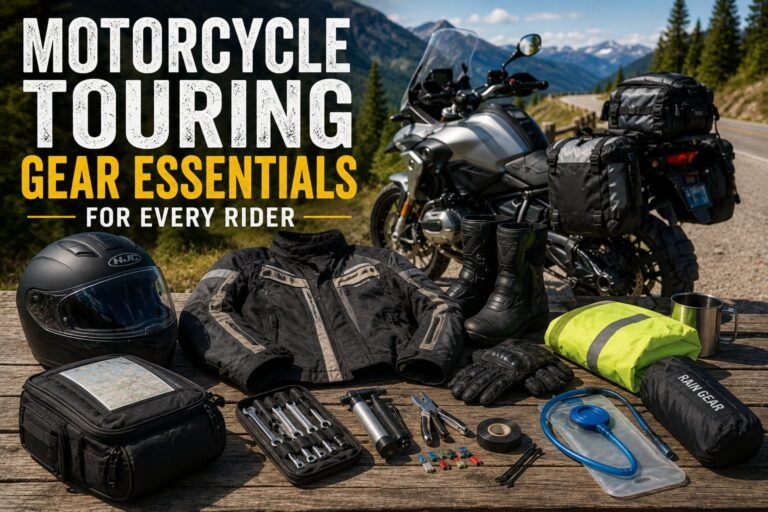
Most gear lists like this one tell you to buy a helmet, a jacket, and some gloves, then call it done. That is not wrong, exactly. It is just not very useful, because it skips the part where half of touring gear only proves its worth once something goes wrong. A jacket that looks fine in the driveway can fall apart after eight hours of wind. A helmet that fits fine for a ten-minute ride can start pressing on your temples by hour three.
So this is less of a shopping list and more of a “here’s what actually matters and why” rundown of the motorcycle touring gear essentials every rider ends up needing. Some of it is safety. Some of it is comfort. A lot of it is just not wanting to ride the last hundred miles of your trip miserable.
Start With the Helmet, Because It’s Not Optional
Purchase a helmet that has the DOT certification sticker attached to its rear. This indicates that your helmet met the requirements of the Federal Safety Test called FMVSS 218, and it’s definitely not worth saving $40 by not having it. Full-face helmets protect the most and block the most wind, which matters more than people think on a six-hour stretch of highway. Modular helmets, the kind where the chin bar flips up, trade a little protection for the ability to talk to a gas station clerk without pulling the whole thing off. Fine trade if that is your style of riding.
It is important to consider how the product fits rather than what brand it is. If the helmet is loose, it is going to jiggle around when you hit bumps; if too tight, it will cause pain in the head before lunch.Try it on. Actually wear it around the shop for ten minutes before you buy it.
Jacket and Pants
Textile jackets with a removable rain liner and a removable thermal liner do more work than a leather jacket, honestly, even though leather still looks better. You want armor pockets at the shoulders and elbows at minimum, and back armor too if it does not already come built in.
Pants get skipped constantly. Riders will spend three hundred dollars on a jacket and then hop on the bike in jeans, which is backwards, because jeans shred in about half a second if you go down. Riding pants with knee armor are not that much bulkier once you get used to them.
Hot climate riders should look at mesh jackets, since they let air through while keeping the armor in place. Cold climate riders want a full thermal liner so they are not stuffing an extra coat into an already full saddlebag.
Gloves and Boots
Your hands hit the ground first in most falls. That is just how the body reacts.Gauntlets with knuckle protection that extend to the wrist provide more coverage for an area that often gets injured than areas like the palm. In high-temperature weather, gloves are furnished with ventilation to keep your hands dry while riding. If you are sweaty, you could lose your grip.
Your footwear needs good ankle support and good traction if the foot pegs are wet. Sneakers feel fine standing in a parking lot. They are close to useless if the bike goes down or if you have to plant a foot fast on loose gravel.
Rain Gear You Will Actually Use
Check the route forecast through the National Weather Service before you head out each morning. It helps you plan around the worst of it. But pack rain gear anyway, because forecasts miss things, and a storm that was supposed to stay forty miles south sometimes does not.
Skip the poncho. It flaps around at highway speed and does almost nothing useful once you are past 50 miles per hour.Wearing a rain suit that covers your jacket and your pants is a much better option; having a brightly colored one is just a minor plus, because it helps keep you visible in adverse weather conditions.
Luggage That Does Not Fall Apart Halfway Through the Trip
Once a trip stretches past a weekend, you need somewhere to put everything, and this is where motorcycle touring gear essentials actually starts meaning something beyond the stuff you wear. Soft saddlebags, a tail bag, or a tank bag all work. What matters more than the style is whether the material is actually water resistant, because you will not get to choose when it rains on your gear.
Tank bags are worth having even if you already have saddlebags, mainly because your phone, wallet, and snacks end up living there instead of buried under everything else. Our packing checklist for multi-day rides goes through exactly what to load where so you are not digging through three bags at a gas station seven miles into your trip.
A Tool Kit, Because Bikes Break at the Worst Times
Even a bike you just had serviced can throw a flat tire at you two hundred miles from anywhere useful. A small kit with tire plugs, a compact air pump, a multi-tool, and a couple spare fuses covers most of what actually goes wrong on the road. Zip ties and electrical tape solve more problems than they have any right to.
Do yourself a favor and practice a basic tire repair in your garage before you need it on the shoulder of a highway in the rain. It takes maybe ten minutes to learn once. Doing it for the first time on the side of the road, in bad weather, with cars going by, is a rough way to learn.
Navigation and Adventure Gear for Longer Rides
Mount your phone or a GPS unit on the handlebars so your eyes stay up instead of dropping down to your pocket every few minutes. If you are heading into rougher terrain, adventure motorcycle gear like dual sport boots and a hydration pack starts earning its keep, since pavement gear does not always hold up off-road.
For anyone stacking multiple states into one trip, our route planning guide covers fuel stops and rest breaks in more detail than fits here.
The Actual Point
You do not need the most expensive version of any of this. You need gear that holds up after the tenth hour of a ride, not just gear that looks right for a photo at the first gas stop. Buy the helmet, buy real riding pants even if they feel unnecessary at first, and figure out your rain gear and luggage before your first long trip instead of during it.
That’s really the whole thing. Motorcycle touring gear essentials are not complicated once you strip away the marketing. They are just the stuff that keeps working when the ride stops being easy.
FAQ
Do I really need riding pants if I already wear jeans?
You should get riding pants. When sliding on the pavement, jeans rip almost immediately while riding pants can stand up to the challenge. They do get bulky but after your first two rides, you forget all about it.
What is the best motorcycle luggage for touring?
It’s the one that’s waterproof. Whether it’s saddle bags, a tail bag or a tank bag, all these items can be useful if the material resists water
How do you know a helmet’s actually safe?
Look for the DOT sticker on the back that means it passed FMVSS 218 testing. If it’s not there, don’t buy it. Simple as that.
What should be in a motorcycle tool kit for road trips?
Tire plugs, a small air pump, a multi-tool, spare fuses, zip ties, and electrical tape. Worth running through how to actually use each one before you leave, too. Nobody wants their first attempt at plugging a tire to happen on the shoulder of a highway with traffic flying by.