
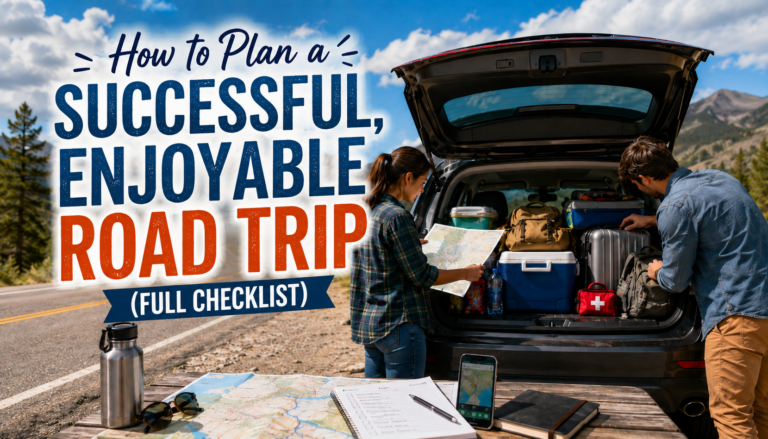
If I may be brutally honest, my first road trip experience was more of a disaster than anything else, because of excess clothing, inadequate food supplies, and I never even checked my tires.Somewhere past Flagstaff I trusted a gas station map over my own phone and lost an hour going the wrong way. And it’s still one of my favorite trips I’ve ever taken, which tells you something. Probably that a little prep saves you from the dumb stuff, not the memorable stuff. So when people ask about how to plan a successful enjoyable road trip tips checklist, that’s really what I mean by it. Not a script for every hour of your day. Just enough groundwork that you’re not losing a whole afternoon to something you could’ve fixed in your driveway.
Figure out where you’re going before you figure out what to pack.
Packing is the fun part; I get why people start there. Route planning feels like homework. But it’s the route that determines everything: how long you will be traveling, how much money you will spend on gasoline, and whether you will be heading toward the pretty sunset or into the traffic jam of some other city.
First choose your essential stops.Grand Canyon, your cousin’s porch in Nashville, whatever it is for you. Drop pins in Google Maps or Roadtrippers and build the rest of the trip around those. And resist the urge to cram in every single spot you’ve bookmarked off some travel blog somewhere, mine included. I’ve made that mistake. You end up seeing most of the trip through a windshield at 60 miles an hour instead of actually being anywhere. Three stops you genuinely enjoyed will always beat ten you just checked off.
Keep your driving days to four, maybe six hours if you can help it. I say this because I didn’t, once, on a Colorado-to-Utah stretch that should’ve been split across two days. Didn’t want to “waste” money on a motel. Pushed through in one go. Nobody in that car was having a good time by hour seven, myself included.
The budget conversation nobody enjoys having
Gas, food, hotel costs, toll fees, and even that one roadside gift shop you will end up stopping at no matter what because you said you weren’t going to.A two-week trip for two people in the US usually falls somewhere between $1,500 and $3,000, and where you land in that range mostly comes down to how often you eat out.
A few things worth actually sitting down and calculating: your car’s miles per gallon times your total mileage times the average gas price along the route gets you a decent gas estimate. For lodging, mixing cheap motels with a couple of nicer stays keeps you from being completely wiped out by day five, because sleeping badly for a week straight will ruin a trip faster than almost anything on this list. And don’t just budget for restaurants. Groceries and a cooler add up to real savings over two weeks, more than people expect.
That kind of road trip budget tip thinking is the difference between a trip that feels easy and one where you’re checking your bank balance at every gas station. TripVaultGuide breaks the numbers down further if you want more detail than I’m giving here.
Deal with the car before anything else.
Everyone skips this part, and it’s the one that bites people hardest. Tire pressure, tread, oil, other fluids, headlights, and brake lights—check all of it. If an oil change is overdue, get it done now, not after you’re stuck on the shoulder somewhere in Nebraska wondering why you put it off for three weeks.
The National Highway Traffic Safety Administration also says to check your battery, belts, and hoses, which wear out faster than people assume once the summer heat kicks in. Twenty minutes in your own driveway beats a very bad afternoon on the interstate.
What actually earns a spot in the trunk
A decent road trip packing list isn’t about filling every inch of trunk space just because you can. It’s the stuff you’ll actually reach for. Weather-appropriate clothes, obviously. A phone charger long enough to reach the back seat, which sounds like a nothing detail until you’re sitting at 4% battery somewhere with no signal. A first aid kit. Snacks that survive heat instead of turning into a melted mess by noon.
Bring an actual cooler even if you’re planning to eat out most nights. Cold water and some fruit on a July drive through Texas have bailed me out more than once.There will be a little garbage bag in the car from the very beginning and not on day four when you realize that you have been rummaging around trying to find wrappers from under the seats.
Are you traveling with kids or a dog? Make sure that you pack enough entertainment. The tablet had something interesting to watch, some toys and a water dish. Little things but they make a big difference in the way the ride in the car feels.
The apps worth keeping on your phone
You really don’t need twenty travel apps taking up space. Google Maps or Waze for the actual driving, GasBuddy when you’re hunting for cheaper gas, and iOverlander or The day trip if camping is part of the plan. That covers almost everything most people need.
This is because these apps work towards solving an issue rather than providing just fancy content for your phone. What people fail to realize till the last moment – download your map offline before heading anywhere that will lack connectivity, especially when you head towards the western part of the country where no connectivity means an hour of silence.
For when the plan falls apart anyway
Even a good plan hits a wall somewhere. Paper map as backup, in case your phone dies at the worst possible moment. The roadside assistance number is saved somewhere you’ll actually find fast, not three contacts deep under someone you haven’t texted since 2019. Tell someone your route and rough timeline before you leave. Feels like overkill until it very much isn’t.
Weather flips fast in places like the Rockies or along the Gulf Coast, so check the morning of, not just the week before when you booked the hotel and figured you were done thinking about it.
Leave a little room for the unplanned stuff
The best parts of most road trips usually weren’t on the itinerary. The diner with the ridiculous pancake special. The overlook you nearly drove right past.Allow yourself some breathing room in your schedule to make that possible when something grabs your attention, rather than clinging to a rigid schedule that makes it impossible. No one ever tells you that one before you figure it out on your own by wishing you had stopped somewhere.
Still piecing together the rest of your how-to plan, a successful enjoyable road trip tips checklist, and a playlist included? TripVaultGuide has more to help fill in whatever’s left before you actually hit the road.
FAQ
When is the best time to make plans for a road trip?
Well, it depends on the trip. Under a week, two or three weeks’ notice is fine. If you’re in a national park or a large city, however, give it a month, perhaps even two. Accommodations in those areas become scarce more quickly than you’d imagine.
Which is the most crucial thing to look at before going on a trip in my car?
Before anything else, your tires. One of the more common ways road trips go awry is if there’s a blowout on the highway, and it’s a five-minute fix to catch in advance: Just look at the tread and check the pressure.
Well, if I have GPS, do I need a paper map?
Yes, please bring one! Signal loss is total and no warning in the rural parts of the country. When it does, it’s a real paper map (or an offline map saved in advance) that prevents a wrong turn from becoming a real turn.
What is the number of miles to traverse each day on an outing?
Most people find 250-400 miles to be the right distance, which equates to about 4-6 hours, including stops. Move beyond that on a regular basis and it will no longer be a vacation! It’s simply just driving.